


It has been more than 75 years since the independent state of Pakistan was carved out of British India. Over this period of time, no other country has experimented with so many different constitutional forms, from parliamentary democracy to presidential form of government, hybrid to outright military regimes. This book analyses constitutional development in Pakistan from its inception to the present times. It provides a case-by-case account of constitution-making in Pakistan, with the inclusion of all pertinent documentation. Constitutional developments have been explained in the context of social and political events that shaped them. The book focuses on constitutional and political history, and constitutional development concurrently. It includes a liberal humanitarian reading of the travails of lawmakers and the role of generals, judges, politicians, journalists, and bureaucrats in the implementation of the constitution and the law. The fourth edition of the book has updated the narrative of constitutional and political developments until September 2018. The fourth edition includes a revised chapter on the breakup of Pakistan in 1971 based on new research on the subject and addresses the causes that led to this tragedy in 1971. In Part Eleven, ‘Constitutional and Political Issues in Pakistan’ has been thoroughly revised and covers the ongoing constitutional and political crises in Pakistan. Students of law, political science, and history, as well as lawyers, judges, and faculty of law will find this book of particular value. Being grounded in a socio-political context, this book will also be of interest to the general reader.

Constitutional And Political History Of Pakistan 4th Edition by Hamid Khan
₨2,650.00
Price Summary
- ₨2,650.00
- ₨2,650.00
- ₨2,650.00
BLACK & WHITE
Language : English
Paperback, Pages 784 EDITION 2024-2025
Original Book by OXFORD!
Delivery All Over Pakistan Charges Will Apply.
Due to constant currency fluctuation, prices are subject to change with or without notice.
Be the first to review “Constitutional And Political History Of Pakistan 4th Edition by Hamid Khan” Cancel reply
Related Products

Rethinking Pakistan: A 21st Century Perspective by Bilal Zahoor
Rethinking Pakistan: A 21st Century Perspective by Bilal Zahoor & Raza Rumi
This book brings together the leading contemporary currents of thought from a galaxy of established scholars and intellectuals of Pakistan. It is a monumental contribution to the national debate on a series of crises and lingering issues that need attention of the stakeholders all around.
The book covers three major areas of investigation into public life in the country. One, it delves into the historical, sociological and cultural causes of various political conflicts, ranging from the negative role of the educational curricula for national harmony to cultural violence and persistent militarism to the curse of enforced disappearances. There are highly analytical contributions that define the conflict-resolution nexus. Two, the book is a source of inspiration on the liberal agenda of creating a scientific frame of mind, setting the feminist debate in a global context, challenging the shrinking space for media and focussing on the largely forgotten area of industrial relations. Readers will find ample issue orientation in the analysis and policy orientation in the deliberations. Three, the book enters a domain of hope, planning for a bright future and focussing on some longer-term issues couched in comprehensive new approaches to development, environment, energy, foreign policy and feminism.
The scope of the book is amazingly wide, the analysis is rich with conceptual references and empirical finding, and the scholarly idiom is comprehensible for both the articulate section of the population and the scholarly community.
Pakistan A New History by Ian Talbot
Delivery All Over Pakistan Charges Will Apply.
Title May Be Different.
Due to constant currency fluctuation, prices are subject to change with or without notice.
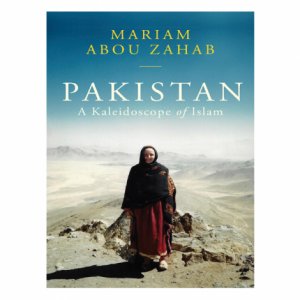
Pakistan: A Kaleidoscope Of Islam by Mariam Abou Zahab
Book Description:
This collection of essays brings together two sets of articles and book chapters by Mariam Abou Zahab, the extraordinary late scholar of Islam in South Asia. The first part of the volume examines Shia-Sunni relations in Pakistan, while the second concerns violent Islamism in the country, covering both the Talibanisation of the Pashtun belt and the jihadi dimension of South Asian Salafism.
Throughout these texts, Abou Zahab explores the many reasons why Pakistan has been the crucible of political Islam. She offers a historical view of this development, factoring in the impact of colonialism and conflict, including the Soviet-Afghan War and the post-9/11 Western military operations in Afghanistan. While making clear the major importance of these external influences, from Saudi Arabia and Iran to the US, she also places Pakistan’s political Islam in the context of local cultures, mobilising her anthropological erudition without ever indulging in culturalism. Finally, she emphasises the sociological determinants of sectarianism, Talibanism and jihadism, as well as the political economy of these ideologies.
Abou Zahab’s knowledge is exhaustive, but in these papers she offers an elegant synthesis in which each word matters. This volume is indispensable for understanding the present dynamics of Pakistan.
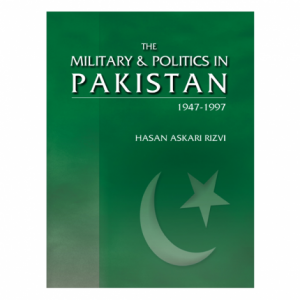
The Military & Politics in Pakistan 1947-1997 By Hasan Askari Rizvi
Delivery All Over Pakistan Charges Will Apply.
Title May Be Different.
Due to constant currency fluctuation, prices are subject to change with or without notice.

Pakistan: Beyond the ‘Crisis State’ Edited by Maleeha Lodhi
More Information
ISBN 9780199064380
Weight in kg 0.452
Year of Publication 2011
Binding Paperback
Pages 417 pages
Delivery All Over Pakistan Charges Will Apply.
Title May Be Different.
Due to constant currency fluctuation, prices are subject to change with or without notice.

Nahj al-Balagha انتخاب نہج البلاغہ
حضرت علی کرم اللہ وجہہ کے حالات زندگی، خطبات، خطوط، اقوال، اور فرمودات کا اردو ترجمہ
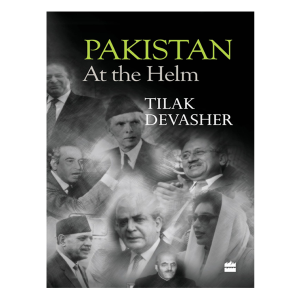
Pakistan: At the Helm by Tilak Devasher
This is a meticulously researched, yet engrossing anecdotal history of Pakistan that surveys the life and times of the leaders who shaped its destiny. These include Ayub Khan, Zulfikar Ali Bhutto, Yahya Khan, Zia Ul Haq, Benazir Bhutto, Nawaz Sharif and Pervez Musharraf. The book explores their quirks and flaws which inevitably seeped into policy decisions with remarkable insight. In the process, it also sheds light on the inner workings of the corridors of power, including the dynamics of the civilian-military relationship, and the circumstances that led to the periodic transitions from democratic to military rule and vice versa.
Remember:
334 Pages
Delivery All Over Pakistan Charges Will Apply.
Title May Be Different.
Due to constant currency fluctuation, prices are subject to change with or without notice.
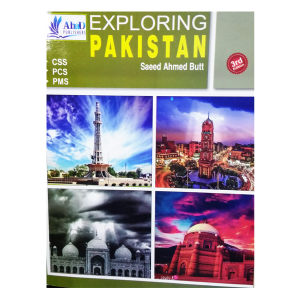
Exploring Pakistan 3rd by Saeed Ahmed Butt
For CSS, PMS, PCS

The Making Of Pakistan: A Study In Nationalism by K. K. Aziz
The Making of Pakistan (A study in Nationalism) is a profound survey of the prolific writer. He delineates in a comprehensive way the inevitable historical factors that helped shape the Muslim nationalism after multifarious events. The writer also brings to the spotlight all the other benignant causes, like the political rift between the Hindu and Muslim community that made the Muslims of subcontinent feel a dire need of a separate representative party.

Jinnah of Pakistan by Stanley Wolpert
Mohammad Ali Jinnah was for Pakistan what Mahatma Gandhi and Jawaharlal Nehru combined were for modern India—inspirational father and first head of state. Jinnah began his career as the Indian National Congress’s ‘Ambassador of Hindu-Muslim Unity’ but ended it forty years later as the architect of the partition that split Pakistan away from India. This authoritative and uniquely insightful biography explores the fascinating public and private life of this eminently powerful but little understood leader who changed the map of the Asian subcontinent.
Portraying Jinnah’s story in all of its human complexity. Wolpert begins in the late nineteenth century with Jinnah’s early life as a provincial country-boy in Karachi and follows him to London where he studied law and became a British barrister. Returning to India in 1896, Jinnah rapidly ascended the dual ladders of Indian law and politics, climbing to the top rung of each. By the 1920s, however, it appeared that Jinnah’s political career was at an end, superseded by the rise of Gandhi’s leadership and the movement of India in a more revolutionary direction. Yet, Jinnah was to remain a pivotal figure in the turbulent decades that followed, as India struggled for independence from British rule amid growing Hindu-Muslim antagonism.
Wolpert vividly recounts how the tragic clash of personalities and party platforms that initially pitted Jinnah against Gandhi escalated from a personal rivalry into a conflict of national and international proportions. Wolpert shows how Jinnah’s shrewd and skillful leadership combined brilliant advocacy and singular tenacity to win his suit for the creation of Pakistan on behalf of the ‘Muslim nation’—his sole client during the last, lonely, pain-filled decade of his life.
Recently Viewed
Pakistan: A Kaleidoscope Of Islam by Mariam Abou Zahab
Book Description:
This collection of essays brings together two sets of articles and book chapters by Mariam Abou Zahab, the extraordinary late scholar of Islam in South Asia. The first part of the volume examines Shia-Sunni relations in Pakistan, while the second concerns violent Islamism in the country, covering both the Talibanisation of the Pashtun belt and the jihadi dimension of South Asian Salafism.
Throughout these texts, Abou Zahab explores the many reasons why Pakistan has been the crucible of political Islam. She offers a historical view of this development, factoring in the impact of colonialism and conflict, including the Soviet-Afghan War and the post-9/11 Western military operations in Afghanistan. While making clear the major importance of these external influences, from Saudi Arabia and Iran to the US, she also places Pakistan’s political Islam in the context of local cultures, mobilising her anthropological erudition without ever indulging in culturalism. Finally, she emphasises the sociological determinants of sectarianism, Talibanism and jihadism, as well as the political economy of these ideologies.
Abou Zahab’s knowledge is exhaustive, but in these papers she offers an elegant synthesis in which each word matters. This volume is indispensable for understanding the present dynamics of Pakistan.
There are no reviews yet.